

Roaches in NYC are common because most New Yorkers live in buildings that share walls, pipes and trash rooms. Roaches find food, water and warmth everywhere, and they move from one apartment to the next. Four kinds cause most of the trouble: German, American, Oriental and brown-banded cockroaches.
Here’s the catch. If only one apartment gets treated, the roaches move next door and come back. For building owners there’s also a legal side, because the city treats roaches in any apartment or hallway as a serious housing violation.
Why are there so many roaches in NYC?
New York’s housing makes life easy for roaches. Apartments sit side by side and stacked on top of each other. Gaps around pipes, radiator lines and wiring connect them. Roaches can squeeze through cracks as small as 1/8 inch, says the NYC Health Department’s pest guide.
Most buildings also give roaches what they need in shared spaces:
- Trash and compactor rooms full of food waste
- Basements and boiler rooms that stay warm and damp
- Leaky pipes, drains and sweating water lines
- Cardboard, newspapers and clutter in storage areas
That’s why a clean apartment can still get roaches. They often come from a neighbor’s unit, the basement or the trash room.
What kinds of roaches live in NYC?
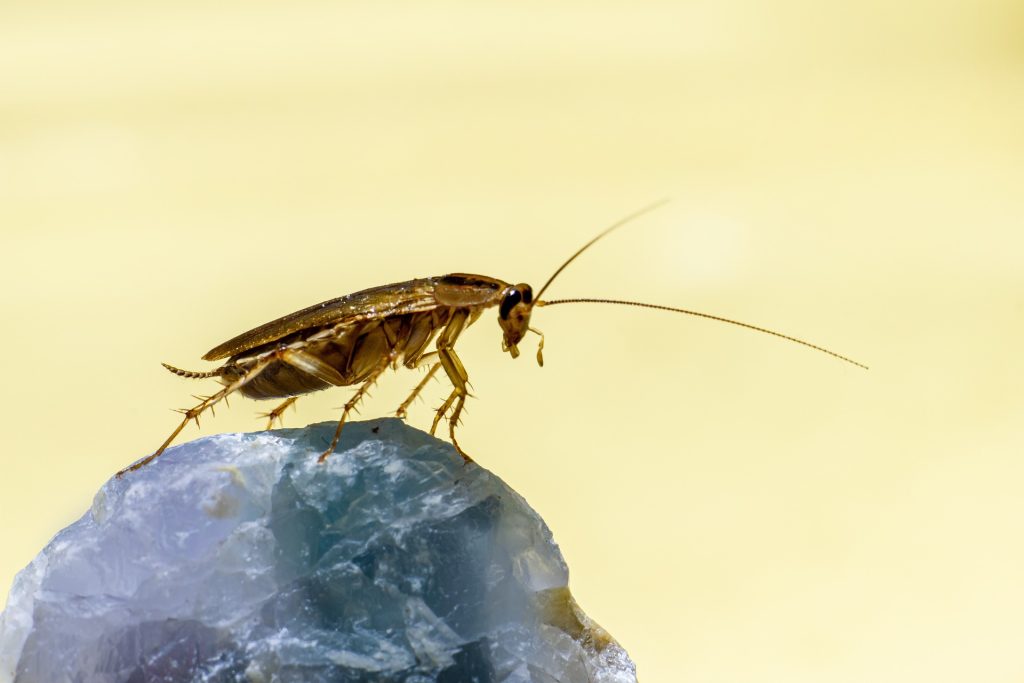
Four kinds cause most roach problems here. Knowing which one you have tells you where it lives and how to treat it. Sizes are from Penn State Extension and Oklahoma State University Extension.
| Roach | Size and look | Where it lives |
|---|---|---|
| German cockroach | 1/2 to 5/8 inch, tan to light brown, two dark lines behind the head | Kitchens and bathrooms, near stoves, sinks and dishwashers |
| American cockroach | About 1 1/2 inches, reddish brown, yellowish edge behind the head | Basements, boiler rooms, pipe chases, floor drains and sewers |
| Oriental cockroach | About 1 inch, very dark brown to nearly black, greasy shine | Cool, damp basements, crawl spaces and drains |
| Brown-banded cockroach | About 1/2 to 5/8 inch, light bands across the wings | Warm, dry, high spots: upper cabinets, picture frames, furniture |
German cockroaches
The German cockroach is the roach most NYC apartments deal with. It lives indoors, in kitchens and bathrooms, and it breeds fast. Each egg case holds 30 to 48 eggs, and the female carries it until the eggs are about to hatch, according to Penn State Extension. Our guide to the cockroach life cycle explains why that matters for treatment.
American cockroaches
The American cockroach is the big one New Yorkers often call a “water bug.” It lives in basements, boiler rooms, pipe chases and sewers. It comes up through drains and along pipes. Not sure what you saw? Read water bug vs. cockroach.
Oriental cockroaches
Oriental cockroaches are dark and slow, and they like it cool and damp. Look for them in basements, crawl spaces and around floor drains. They can sometimes climb water pipes to upper floors. Our Oriental cockroach guide covers them in detail.
Brown-banded cockroaches
Brown-banded cockroaches need less water than other roaches. So they turn up in odd places: high on walls, behind picture frames, inside furniture and near the warm motors of appliances. Females glue their egg cases to furniture and other surfaces.
When is cockroach season in NYC?
In a heated New York building, there’s no off season. German cockroaches breed indoors all year. Still, sightings go up in the warm, humid months of late spring and summer. That’s when American and Oriental cockroaches are most active and move up from basements, drains and sewers.
If you own or manage a building, fall and winter are a good time to inspect and seal before the next warm season.
How do you know you have roaches?
Roaches hide during the day, so the signs often show up before the bugs do:
- Droppings that look like ground pepper or coffee grounds, behind appliances, in cabinets and along baseboards
- Egg cases: small brown capsules tucked into cracks and corners
- Shed skins near hiding spots
- A musty smell in cabinets or closets where many roaches live
- Roaches out in daylight, which usually means a large population
If you rent, tell your landlord or super as soon as you see these signs. If you manage the building, note the unit and check the apartments around it.
Why doesn’t treating one apartment work?
Here’s a simple example. Say a tenant on the fourth floor keeps reporting roaches in her kitchen. Each time, her apartment alone gets treated. The roaches fade for a few weeks, and then she calls again. They were never only in her unit. They were living in the wall behind her stove, in the apartments on either side and in the trash room downstairs. Checking the units above, below and beside hers, plus the trash room and basement, shows where they live. Treating and sealing those spots ends the repeat calls.
Treating the whole building is a bigger job, and it isn’t always needed. A few German roaches in one apartment, caught early, can often be cleared from that unit alone. Once the neighbors or the trash room have them too, plan for pest control for the whole building.
Who is responsible for roaches in an NYC apartment?
The owner. New York City law requires property owners to keep apartments free of pests, including roaches. Under Local Law 55 of 2018, owners of buildings with three or more apartments must:
- Check every unit once a year for roaches, mice, rats and mold
- Fix pest problems using Integrated Pest Management (IPM)
- Have pesticides applied only by a pest professional licensed by New York State
- Make sure empty apartments are free of pests before a new tenant moves in
HPD, the city’s housing agency, treats mice, rats or roaches in any apartment or common area as a Class C violation, its most serious class. Owners get 21 days to fix it.
IPM means taking away what roaches need (food, water, hiding spots and ways in) and using pesticides only where they’re needed. Our guide to integrated pest management explains how it works.
How do you get rid of roaches in an NYC apartment?
The NYC Health Department’s pest guide recommends these steps:
- Take away food: store it in sealed containers, wash dishes and wipe counters at night, and use a trash can with a tight lid.
- Take away water: fix leaks, and cover unused drains with rubber covers or metal screens.
- Cut clutter: recycle cardboard, paper bags and newspapers, especially near the stove, refrigerator and sink.
- Seal cracks and holes with caulk, spackle or steel wool.
- Use gel baits, bait stations or boric acid dust where roaches travel, and sticky traps to see where they are.
- Skip foggers and bug bombs, and never buy pesticides from street vendors.
If roaches keep coming back, they’re probably coming from outside your apartment. Tell your landlord or managing agent. If the problem isn’t fixed, call 311. Our guide on how to prevent cockroaches covers each step in more detail.
How we handle roaches in NYC buildings
NYC Extermination follows Integrated Pest Management on every roach job:
- Free on-site inspection. We find the species, where they hide and how they get in, in the apartments and the common areas.
- Targeted treatment. EPA-registered products go where roaches live instead of being sprayed across whole rooms.
- Sealing. We close the gaps around pipes, under sinks and behind appliances that roaches travel through.
- A plan for the building. For landlords and managers, we set which units to treat and how often to come back.
NYC Extermination is family owned and has worked in New York City for 25 years. Learn more about our cockroach exterminator service, or call (347) 988-2315 to schedule a free inspection.
Frequently asked questions
How common are roaches in NYC?
Very common. In the city’s 2023 Housing and Vacancy Survey, 30.6% of NYC homes had cockroaches. The share ran from 10.0% on Staten Island to 49.2% in the Bronx, according to the NYC Environment and Health Data Portal.
Do all NYC apartments have roaches?
No. In that same 2023 survey, about 7 in 10 NYC homes didn’t have them. The building matters most: how trash is handled, whether leaks get fixed and whether the gaps around pipes are sealed.
Why am I suddenly seeing roaches in my apartment?
Usually something changed nearby. A leak may have started, warm weather may have brought roaches up from the basement, or a neighbor’s spray may have pushed them toward your unit. Tell your super, and ask for the apartments around yours to be checked.

Recent Comments